
Coin Volcano 2 demo: play free
- 95.76%RTP
- Grand 500xMax win
- 3x5Layout
- Medium to highVolatility
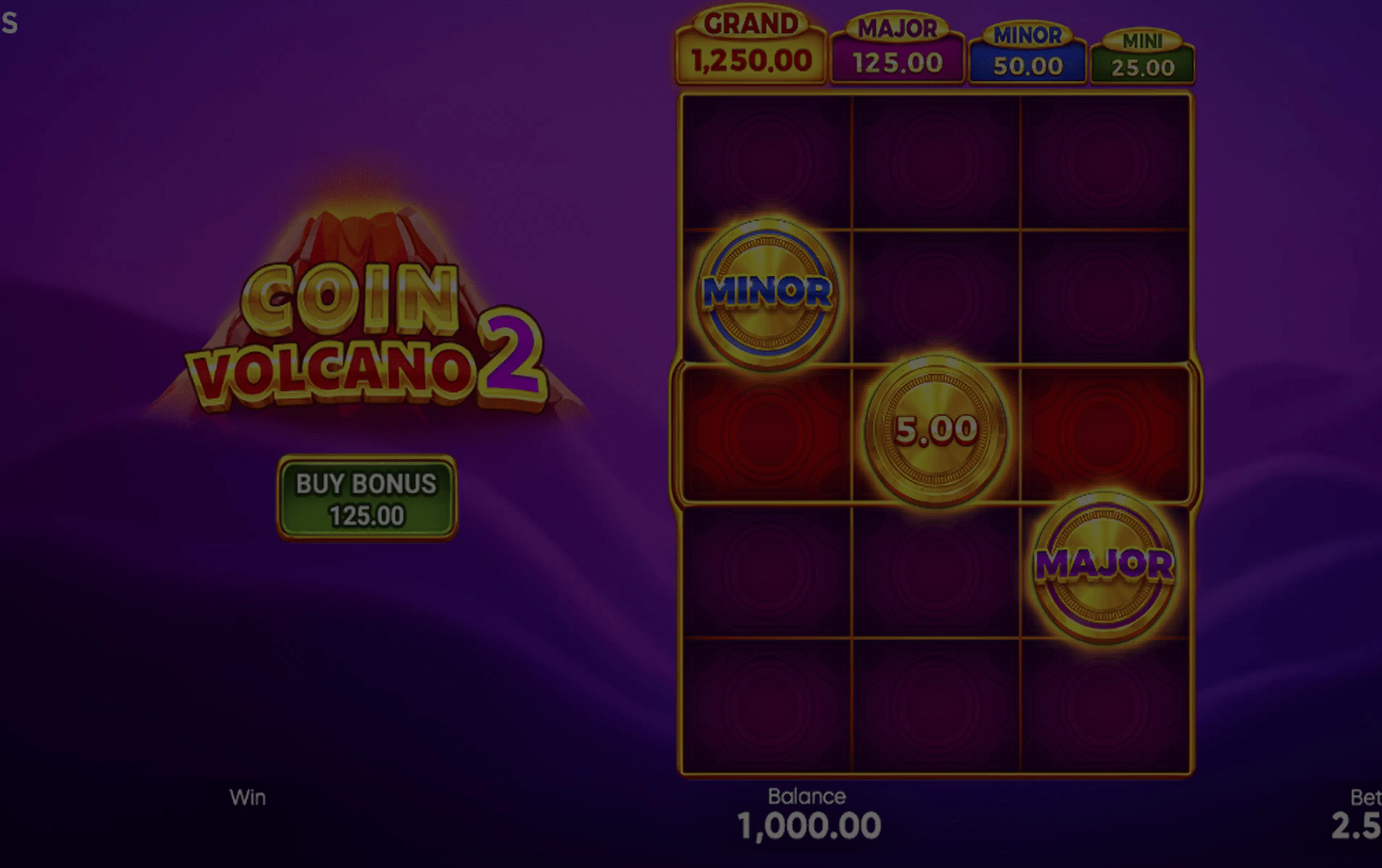
The demo above is the entire sequel on virtual credits: 3x5 grid, Hold and Win, Ultra Bonus and 4 fixed jackpots. It answers one question cheaply: does the denser bonus structure suit you better than the original’s single tall peak?
What to measure, original vs sequel
Give each version about a hundred spins and track two numbers: how often a bonus triggers, and how high the wins inside it run. The original concentrates value in a rare peak with a 2,551x advertised max win; the sequel builds its rounds from stacking multipliers under a 500x top jackpot. Neither is “better”; the demo shows which variance shape your patience can hold. The full numbers are in the Coin Volcano 2 review , and the original’s demo is one click away for the comparison.
For most US players the demo is the destination, not a preview: real-money play is state-licensed in only a handful of states, and the studio’s slots are rare in those lobbies. The demo is identical everywhere and risks nothing.
What the demo will not show you
There are four gaps, and only one of them is about the math.
The top of the game. The Ultra Bonus and the upper jackpot tiers are rare enough that an entire demo evening can pass without either. If they never show up, that says nothing about the game, only about how little of it a few hundred spins can cover.
Your operator’s build. The demo runs a reference configuration: RTP as 95.76%, jackpots as Mini 10x, Minor 20x, Major 50x, Grand 500x (may vary by casino version), with the top tier version-dependent. Only the paytable in the lobby you deposit into describes what you would be playing.
Whether Bonus Buy exists for you. It is an operator option on this title, frequently removed. A demo that includes it tells you nothing about your lobby, and neither does a demo that omits it.
Anything with an account attached. Limits, reality checks, verification, withdrawal timelines: none of it can be tested here. That belongs to the casino checklist .
Why the credits reset, and the trap it sets here
Refreshing restores the balance, so the one ending that matters in real play (running out) cannot happen. On this title the distortion takes a particular form.
Because the sequel produces events often, an inexhaustible balance makes the game feel like it always comes back. It does, as long as the credits do. Under a real bankroll, the same frequent-but-modest pattern can grind steadily downward while feeling active the entire time, which is a harder failure to notice than a long visible drought.
So treat the reset as a missing gauge, not a feature. Cap the session by spin count before you start, and track what a real balance would have done: pick a notional starting figure, and watch whether the frequent events hold it up over a few hundred spins or just keep it busy on the way down.
When the demo has taught you enough
Testing has a finish line, and grinding past it is how a free session turns into a habit. You are done when you can answer three things without guessing:
- Which layer is firing. Bonus Game, Ultra Bonus and stacking multipliers should be distinguishable to you on sight. If they still blur together, keep going, because that confusion is what makes a real session hard to read.
- How long the quiet stretches run. One number: your longest gap between bonuses.
- Whether the ceiling bothers you. The top jackpot is 500x against a max win of 2,551x on the original . If the trade still feels wrong after an evening, that is a useful answer.
Two signals point the other way. If you find yourself replaying to chase a bigger virtual win, or reaching for the refresh button to keep a run going, close the tab. Those are the same impulses that cost money later, and noticing them here is free.
Real-money play is 21+ through state-licensed operators only. If gambling stops being fun, call or text 1-800-GAMBLER.