
Coin UP Volcano RTP: how to read it and price it
- 4x3Layout
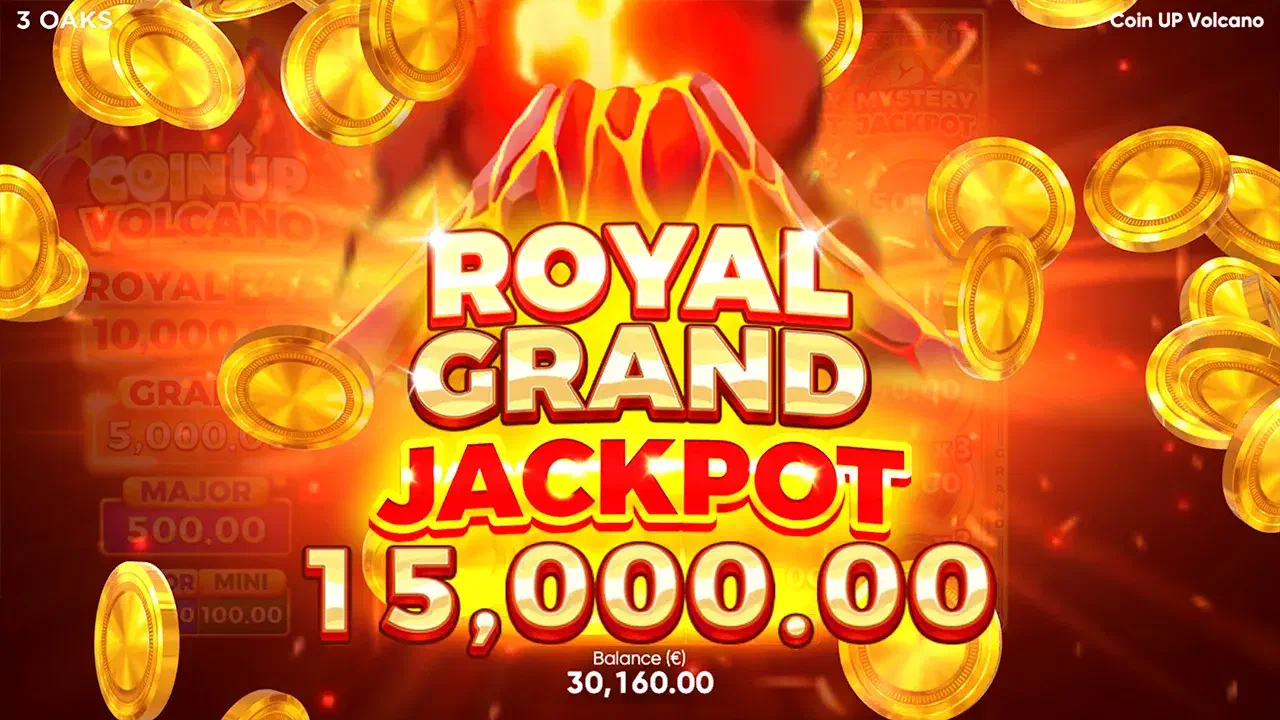
Every return figure quoted for a slot describes a certified build, and on a title this new the build that matters is the one your own casino installed. The steps below show where that figure lives and turn it into the number you care about: what a session costs.
Step one: read the panel
Open Coin UP Volcano at your operator, tap the menu and open the game information screen. The return, the stake range and the jackpot line are printed there for the version in front of you. It takes about thirty seconds and it replaces every estimate published about this game so far.
3 Oaks describes the mechanics in full on its own game page (board, modifiers, jackpot ladder, Bonus Shop) and leaves the numeric profile to the certified versions it ships to casinos. Your panel is where those two halves meet.

Step two: convert it to a house edge
Subtract the return from 100%. Whatever figure your paytable prints, the remainder is the edge: the share the game keeps, on average, from everything you stake. The studio has not published a central RTP for Coin UP Volcano, so there is no reference number to borrow; check the paytable in your casino.
Step three: price a thousand spins
Multiply your spin cost by a thousand to get turnover, then multiply the last column by the edge your paytable implies.
| Spin | Turnover per 1,000 spins | Cost per percentage point of edge | How to finish the sum |
|---|---|---|---|
| £0.20 | £200 | £2.00 | Multiply by your edge in points |
| £0.50 | £500 | £5.00 | Multiply by your edge in points |
| £1 | £1,000 | £10.00 | Multiply by your edge in points |
| £5 (statutory cap) | £5,000 | £50.00 | Multiply by your edge in points |
Two cautions attach to that table. It is a long-run average over runs far longer than anyone plays, not a prediction for your evening. And the line selector multiplies the turnover column directly: three lines at a £1 line bet is a £3 spin, so the third row becomes the first one you should read.
Where the return is stored on this game
The percentage tells you the size of the house’s share; the structure tells you how you will experience it. Here, value is concentrated in the Hold and Win round, and within that round it is concentrated again at the two board thresholds.
The three lower jackpot tiers (the full ladder reads Mini 10x, Minor 20x, Major 50x, Grand 500x, Royal 1,000x) land as tagged coins and arrive often enough to shape ordinary rounds. The Grand needs the bottom three rows covered. The Royal needs all twenty-four cells.
That distribution means a run of unremarkable sessions is compatible with any published return figure. The average is real; it is assembled from outcomes that are not evenly spread.
The volcano family as a benchmark
Once you have your panel’s figure, this table tells you where it sits among the titles that do publish one centrally.
| Title | RTP | House edge | What it means for the comparison |
|---|---|---|---|
| Coin UP Volcano | see your casino's paytable | not published | The newest release, an expanding board and a per-line ladder, priced by the build your casino installed |
| Coin Volcano | 95.66% | 4.34% | The original, on a 3x3 board with one mechanic and a taller published ceiling |
| Coin Volcano 2 | 95.66% | 4.34% | Denser bonus structure, four fixed jackpots, a 500x top jackpot |
| 3 Coin Volcanoes | 95.68% | 4.32% | Life, Multi and Grow volcanoes on a 4x3 grid, with shorter gaps between events |
| 3 Super Coin Volcanoes | 94-96% | 4%-6% | The other title where your casino’s configuration decides the cost |
| Jungle Volcano | 95.80% | 4.20% | A fixed edge, delivered through real free spins |
| Lava Coins Hold and Win | 94.63% | 5.37% | The most expensive spin in the family |
| Lava Coins 2 | 95.50% | 4.50% | A modest premium for collectors and a recharge mechanic |
Most of this family clusters between 4.2% and 4.5%, which is the useful context: a figure in that band is ordinary for a 3 Oaks volcano slot, and one materially outside it is worth a second look before you settle in.
The British layer
UKGC-licensed builds run without the Bonus Shop and cap stakes at £5 a spin (£2 for players aged 18 to 24). Both change the shape of a session rather than the percentage: no bought bonuses, and a hard ceiling on the turnover column above.
Where to look next
- The Coin UP Volcano fact sheet : symbols, thresholds and the full modifier set
- Choosing a casino : including where the info panel sits and what else to read while you are in it
- Free demo : sample the pacing before pricing it
18+. A published average is a long-run figure, not a plan for tonight. Set limits first. UKGC-licensed operators only; BeGambleAware.org and GAMSTOP.