Coin Volcano RTP, the number, the edge and the cost
Most pages that rank for this query print the percentage and stop, which leaves you holding a figure you cannot do anything with. This one converts it into the thing you actually pay.
From return figure to house edge
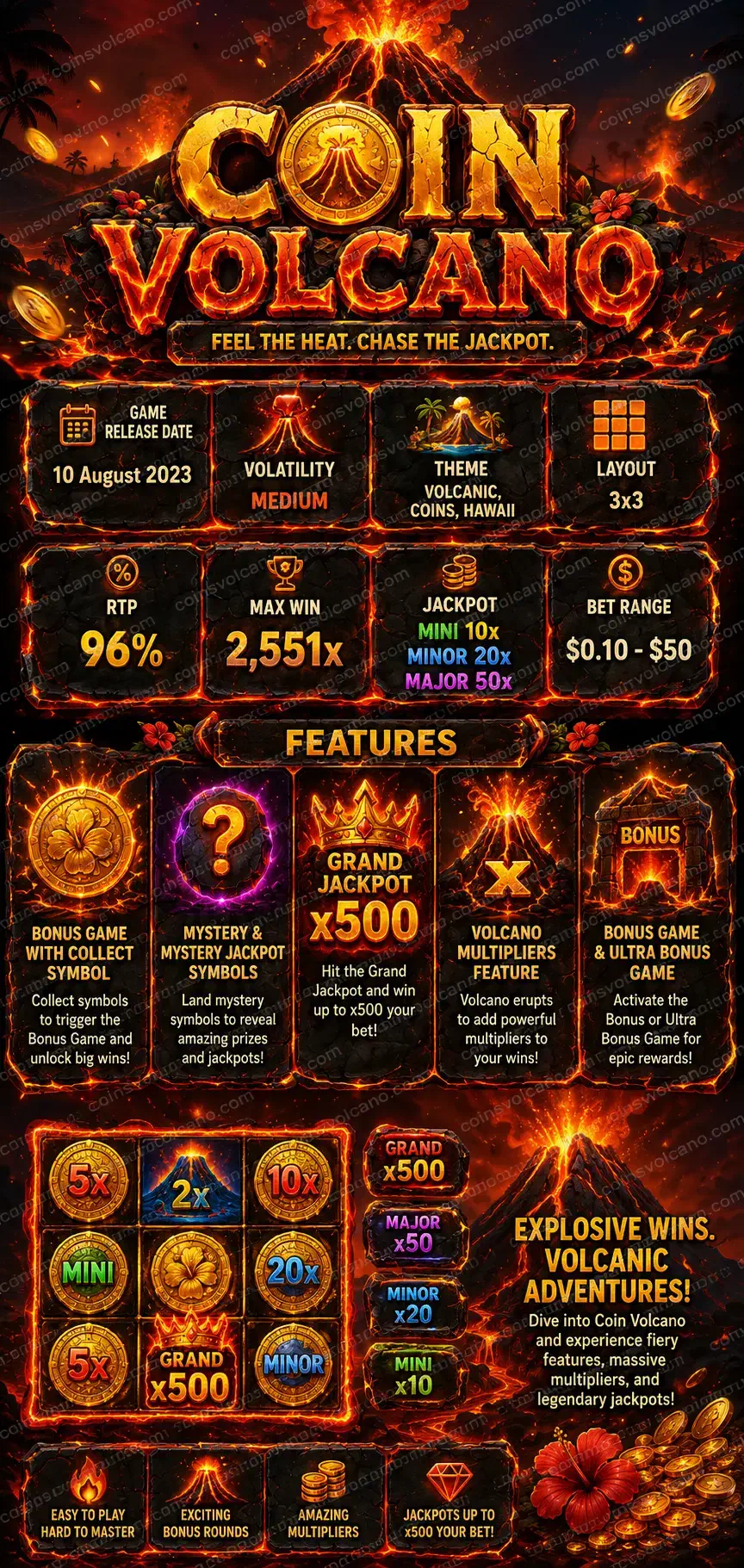
The published return is 95.66% / 96% (may vary by casino version). Read from the other direction, that standard build carries a house edge of 4.34%, the share of everything wagered that the game keeps over the long run. The second certified configuration trims that edge to 4.00%, which is a meaningful difference for anyone who plays this title regularly.
Priced out, at a C$1 spin over 1,000 spins you have wagered C$1,000. The theoretical long-run cost of that turnover is about C$43.40, or C$40.00 on the alternative build. Treat both as averages taken across an enormous number of spins, not as a prediction of what this particular thousand will do to your balance. Your actual result will land somewhere either side of it, often a long way either side.
The long run is longer than your evening
Convergence to a published return takes hundreds of thousands of spins. A thousand is statistically nothing, a rounding error in the sample size the certification was measured over. What governs how a hundred spins actually feel is volatility, and Coin Volcano is rated Medium to medium-high.
There is a structural point here that matters more than either number. In Coin Volcano the base game never pays. No line combination wins, so every dollar of the published return is delivered inside the Hold and Win bonus. A session that never triggers the bonus returns nothing at all, not a reduced amount, nothing: no matter how high the RTP on the sheet. That is why the lived experience of this game is long flat stretches punctuated by the only thing that pays, and why the published figure tells you nothing about tonight.
Two casinos, two builds, one game
Operators install certified configurations, and the studio supplies more than one. For Coin Volcano the source tables in circulation quote two different figures, and both are legitimate, they are simply different builds of the same slot. That discrepancy is not an error to be resolved on a comparison site; it is a variable that only your own lobby can settle.
So check the paytable or info panel in the casino you actually play at. It reports the return for the version installed there, and it is the only source of truth for your version. The Canadian angle sharpens this: both the catalogue and the installed build differ between an open-market Ontario or Alberta operator and a provincial lottery platform, so seeing the same game name in two lobbies is not a promise of the same mathematics.
All seven titles, ranked by edge
| Game | Edge over you | Published return | Practical consequence |
|---|---|---|---|
| Coin UP Volcano | read from your panel | see your casino's paytable | Newest release: expanding board and a per-line jackpot ladder |
| Jungle Volcano | 4.20% | 95.80% | The cheapest seat in the room, but it pays you in rare spikes rather than steady returns |
| 3 Coin Volcanoes | 4.33% | 95.67% | Two builds circulate and the gap between them is too small to shop around for |
| Coin Volcano (this page) | 4.34% | 95.66% | Which build your lobby installed matters more than its place on this ladder |
| Coin Volcano 2 | 4.34% | 95.66% | Extra features cost you nothing extra, the sequel prices identically to the original |
| 3 Super Coin Volcanoes | 4% to 6% | 94-96% | The only title where choosing the operator changes the maths |
| Lava Coins 2 | 4.50% | 95.50% | A different feature set, and you pay a small premium for it |
| Lava Coins Hold and Win | 5.37% | 94.63% | The most expensive seat of the seven; keep it as a change of scene, not a staple |
3 Super Coin Volcanoes cannot be placed on this ladder cleanly, because its position depends entirely on which build the operator installed, it can sit at the top or below everything here.
Keep reading
- Coin Volcano slot : symbols, features and the full spec
- Casino checklist : verifying your operator and your version
- Free demo : feel the variance without paying for it
None of the above is a strategy, because none exists for a fixed-return game. Play within a budget you have set in advance, at 19 or over in most provinces and 18 or over in Quebec, Alberta and Manitoba, through the operator your province regulates.