
Coin Volcano at a casino, the province-first checklist
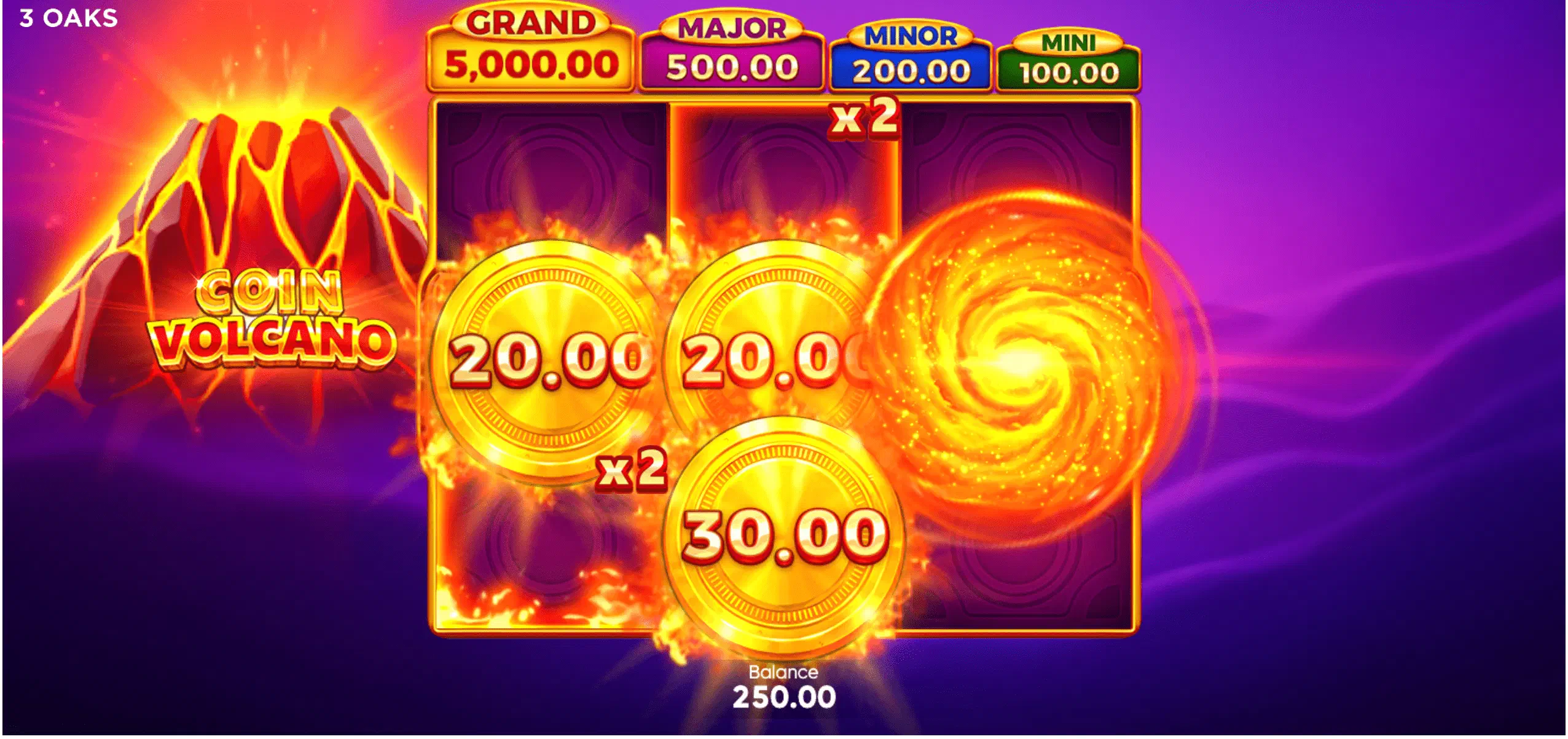
Searching “Coin Volcano casino” mostly returns two things: “official site” clones and interchangeable bonus lists. Neither answers the real Canadian question: which operators are legal in your province, and do they actually carry this game. Here is the checklist, in order.
The 5 checks
- Your province’s framework first, Ontario: check the operator against the AGCO/iGaming Ontario registered list (19+). Alberta: AGLC-registered operators, market open since 13 July 2026 (18+). BC and Manitoba: PlayNow. Quebec: Espacejeux (18+). Elsewhere: your provincial platform. An offshore site with no provincial standing offers you no local recourse.
- 3 Oaks Gaming in the provider filter, no 3 Oaks in the lobby means no Coin Volcano, no matter what the landing page promised. Provincial platforms have narrower catalogues than Ontario or Alberta open-market operators, so this check fails more often than you would expect.
- Game version in the paytable, open the info panel: displayed RTP (95.66% / 96% (may vary by casino version)) and Grand Jackpot value (500x or 2,500x). It is the only reliable source for YOUR version.
- Demo access, an operator that hides the demo before deposit takes away your only free test; run the demo here before committing.
- CAD deposit and withdrawal terms plus safer-play tools, limits, timelines, documents, wagering terms on bonuses, and the presence of deposit/loss limits and self-exclusion. Each province runs its own self-exclusion program; a serious operator connects you to it.
Red flag: any site calling itself “the official Coin Volcano site” while asking for a deposit. 3 Oaks Gaming is a development studio, it operates no casino.
What differs between two casinos carrying the same game
Same title, same studio, different product. Four things move between operators, and every one of them is visible before you fund anything.
The jackpot ladder. The tiers printed in your paytable are the tiers your account can actually win. The reference configuration runs Mini 10x, Minor 20x, Major 50x, Grand 500x-2,500x (may vary by casino version). Where your info panel disagrees with a review site, the info panel is the one describing your game.
The return configuration. Published values sit at 95.66% / 96% (may vary by casino version), and the operator chooses which build it installs. The gap is small on this title compared with the newer ones in the series, which is precisely why it should not be the criterion you optimize hardest.
The feature-purchase button. Bonus buy is a per-market, per-operator switch. Its absence is not a broken build, several regulated Canadian lobbies simply do not carry it, and a game without it is otherwise identical.
Autoplay and spin pacing. Operators registered with AGCO and iGaming Ontario run slots without autoplay and with a mandatory minimum interval between spins, under the Registrar’s Standards for Internet Gaming. An Alberta or offshore build of the same game may still offer autoplay. If your Ontario lobby feels slower than a demo you tried elsewhere, that is compliance rather than a downgrade, and it changes how long a given number of spins takes, which matters when you are budgeting by the hour.
If you already hold a casino account
The default move is not to open another one. Search your current lobby by name first, a good share of “which casino has Coin Volcano” hunting ends with the game sitting in an account whose identity checks you cleared months ago.
Switching earns the fresh KYC paperwork only when the existing operator fails on something structural: no 3 Oaks Gaming shelf at all, demo mode locked behind a deposit, no configurable deposit and loss limits in the account settings, or CAD withdrawals that quietly route through a currency conversion. A two-decimal difference in published return is not, on its own, a reason to spread one bankroll across three operators, split balances are harder to track, and every extra account is another set of promotional emails aimed at your deposit button.
When this checklist does not apply
If your only regulated route is a provincial platform, Espacejeux in Quebec, PlayNow in British Columbia and Manitoba, the Atlantic and Prairie lottery sites: none of the checks above change the answer. Those catalogues are thin on 3 Oaks Gaming and this title is usually absent, so there is nothing to verify.
The honest options at that point are two, the free demo , which behaves identically from any province, or a Hold and Win title your own platform genuinely stocks. Reaching for an unregulated offshore lobby to get at one 3x3 slot trades every piece of consumer protection you have, dispute resolution, enforceable payout terms, provincial self-exclusion, for a game you can already play for free.
Play responsibly, 19+ in most provinces and 18+ in Quebec, Alberta and Manitoba. Game details in the Coin Volcano review ; bet sizing on the play page .