
Coin Volcano 2 demo, play for free
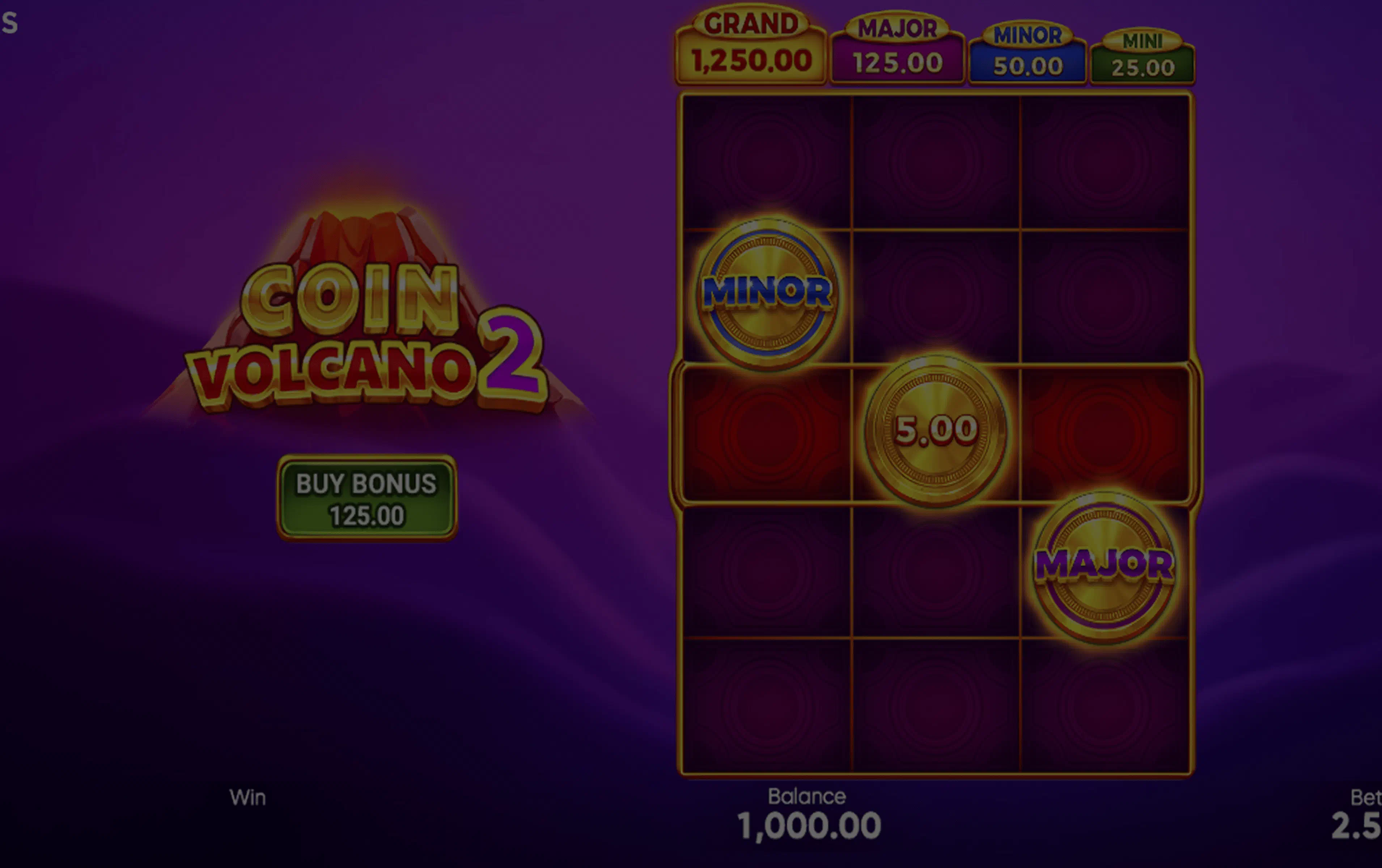
The Coin Volcano 2 demo gives you the whole game: 3x5 grid, Hold and Win, Ultra Bonus and 5 jackpot tiers, on virtual credits. It is the best way to check whether the sequel’s denser bonus structure matches your style before any deposit, and since the sequel has not reached every Canadian lobby yet, the demo may be your only way to try it without switching operators.
Original vs sequel demo: what to compare
Play about a hundred spins on each version and track two things: how often the bonus triggers and how high the wins run when it does. The original concentrates its potential in a tall, rare ceiling; the sequel spreads it into more frequent, more modest events. Neither is “better”, the demo reveals which matches your tolerance for dry stretches. The numbers are in the Coin Volcano 2 review ; the original’s demo is one click away for comparison.
What the demo leaves out
The engine is complete. The surroundings are not, and on this title the gaps are specific.
The balance refills on reload, which quietly removes the only lesson worth learning about stake size. On a game built from frequent small events, that matters more than it does on the original, the sequel’s rhythm encourages a longer sitting, and a longer sitting at a real stake is a different amount of money than the same session felt like here.
The buy button may not survive the move to your lobby. Feature purchase is switched per market and per operator, and a number of regulated Canadian lobbies do without it entirely.
Spin pacing will differ if you play in Ontario. AGCO-registered operators run slots without autoplay and with a minimum interval between spins, so the quick chain of bonus layers that makes this game feel lively in demo is hand-fed on a real Ontario account. It is the same game, spread over more wall-clock time.
And the configuration is the studio’s reference build. The five jackpot tiers here run Grand 500x (may vary by casino version); your operator’s paytable is what describes your account.
What to write down while the bonus is running
The general spin-count comparison above tells you how often things happen. These four observations tell you what happens when they do, and they are the ones that decide whether the sequel’s structure suits you.
- How many bonus rounds ended on the first set of re-spins. A high share is the honest texture of the game and the main reason sessions drift downward quietly.
- Whether multiplier cells actually landed on locked coins. The mechanic only pays when the two coincide, and watching how often they miss is more instructive than any description of it.
- What the median bonus paid as a multiple of your bet. The median, not the best: with a 500x ceiling, the tall outcomes are rare enough that remembering them distorts the whole picture.
- How the Ultra Bonus compared to a standard round. If the difference feels small to you in demo, the buy price attached to it in real money will feel large.
When the demo will steer you wrong
Three habits produce a confident conclusion that will not hold up. Judging after a single strong bonus, because this game’s variance lives in the tail. Playing at a stake near the top of the $0.10-$70 range because the credits are free, which teaches a rhythm your actual budget cannot sustain. And buying the feature repeatedly in demo, which converts the game into a highlight reel and tells you nothing about the base-game stretches that fill most of a real session.
The demo is also the wrong tool for one question entirely: whether an operator is worth depositing with. That belongs to the casino checklist , and no amount of free spinning substitutes for it.
Real-money play requires legal age in your province, 19+ in most, 18+ in Quebec, Alberta and Manitoba, and an operator regulated in your province.